
Table of Contents
Introduction: Ancient Ritual
“Wait, wait… hold him tight so that he doesn’t pass out.”
This is not a dramatic line from a Hollywood movie. These exact words are carved into solid stone on the wall of a tomb belonging to a high-ranking official in ancient Egypt—written nearly 4,300 years ago. What survives on that wall is one of the oldest known depictions of a surgical ritual in human history.
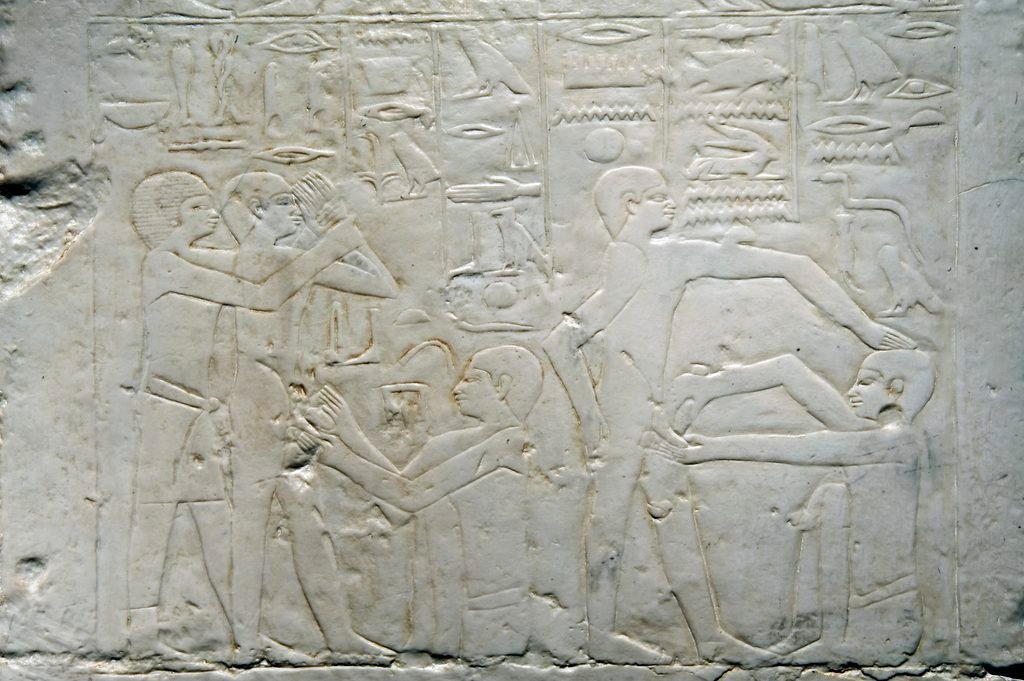
Credit: Science Museum, London.
images@wellcome.ac.uk
http://wellcomeimages.org
For hundreds of millions of people today, this small procedure is a sacred religious commitment and the symbol of an everlasting covenant with God. Others see it as the sunnah of the prophets, or view it strictly through the lens of modern preventive medicine. Yet, in courtrooms across Europe, a growing movement considers this exact same practice a serious violation of human rights and bodily autonomy.
If someone asked you to name the oldest religious ritual in human history, you might guess prayer, sacrifice, or fasting. Historians, however, point to a practice that stretches back more than 5,000 years: circumcision.
Click this link to watch the full video on this topic. https://youtu.be/NJHDqo4IjzA
what is circumcision ?
In medical terms, circumcision is the surgical removal of the foreskin (prepuce) covering the tip of the penis. Millions of newborn boys and adult men undergo it every year—for worship, family tradition, medical necessity, or personal choice. Yet beneath this familiar practice lie questions that have sparked debate for centuries:
The Questions That Divide History, Faith, and Science
- Did circumcision truly begin with Prophet Abraham, or was it already widespread thousands of years before he was born?
- Why does Jewish law strictly command circumcision on the eighth day after birth?
- Why do Muslims regard it as an essential tradition (Sunnah), even though the word “circumcision” never explicitly appears in the Quran?
- Why did early Christians abandon the requirement of circumcision when Jesus himself was circumcised on the eighth day?
- Does modern science actually support the procedure, and why did a German court classify it as “bodily harm”?
To find the answers, we must set emotion aside and examine archaeological records, sacred texts, and clinical research.
Saqqara, 2345 BCE: Inside the “Doctor’s Tomb”
Because circumcision is universally practiced across the Muslim world today, many assume it originated with Islam. Archaeological evidence, however, takes us much further back—to Saqqara, just south of Cairo.
Here stands the tomb of Ankhmahor, a vizier who served during the reign of Pharaoh Teti between 2345 and 2323 BCE. Known to archaeologists as the “Doctor’s Tomb” for its detailed medical carvings, its walls preserve a scene over 4,300 years old. In the relief, two young men or adolescents—not infants—undergo the procedure. One is held from behind while the practitioner says, “Hold him so that he does not faint,” and another inscription reads, “Cut it well,” followed by the reply, “I will do so carefully.”
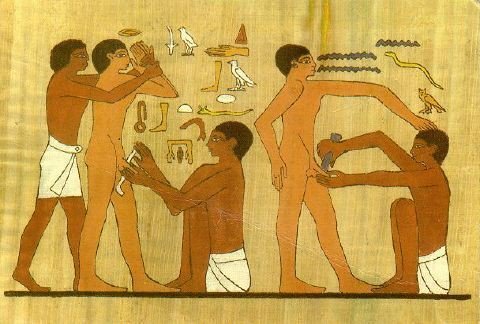
Does the oldest surviving image prove that circumcision began in Egypt? Not necessarily. Finding a wedding photograph from 1920 only proves that weddings took place in 1920, not that marriage was invented that year. Similarly, Ankhmahor’s tomb proves the ritual was established in Egypt over four millennia ago, while its true origin reaches even deeper into antiquity.
What Ancient Mummies and Historians Reveal
Egypt was not alone. The ancient Greek historian Herodotus noted that Egyptians practiced circumcision for cleanliness, while the first-century historian Josephus mentioned Egyptians, Ethiopians, Syrians, and Phoenicians in connection with the custom. Physical examinations of ancient Egyptian mummies confirm that certain individuals were circumcised—yet many others were not, suggesting it was likely reserved for priestly classes, nobility, or specific coming-of-age rites rather than compulsory for every citizen.
Across ancient Africa, the Arabian Peninsula, and West Semitic societies, the ritual served as a mark of adulthood, social status, or ritual purity.
The Great Historical Paradox: If circumcision was already practiced in Egypt and surrounding regions, why is Prophet Abraham universally revered across Judaism, Christianity, and Islam as the central figure of circumcision? And why did Abraham circumcise his two sons—Ishmael and Isaac—at two completely different ages?

Click this link to watch the full video on this topic. https://youtu.be/NJHDqo4IjzA
The 99-Year-Old Covenant: How Prophet Abraham Transformed an Ancient Custom
Imagine you are 99 years old. You have lived a full, eventful life, and at an age when most people are simply seeking rest, God delivers a command that will permanently alter not only your own body, but the identity of your descendants for thousands of years to come.
According to the Book of Genesis (Chapter 17), this is precisely what happened to Prophet Abraham.
Here, we encounter a crucial distinction between general history and religious history. Archaeological records show that circumcision already existed in ancient Egypt and parts of Africa before Abraham’s time. However, religious tradition teaches that through Abraham, an existing physical custom was elevated into something entirely new: a sacred, visible sign of an everlasting covenant between God and His people. Online debates often argue over whether circumcision “began” in Egypt or with Abraham—but historically, both statements address two different things: the existence of a physical practice versus the birth of a divine covenant.
Genesis 17 and the Mystery of the Eighth Day
“This is my covenant, which you shall keep, between me and you and your offspring after you: Every male among you shall be circumcised… So shall my covenant be in your flesh an everlasting covenant.” — Genesis 17:10–13
Genesis 17:12 introduces another specific command: every newborn male must be circumcised on the eighth day after birth. Interestingly, the Torah does not offer a medical explanation for choosing the eighth day; it presents the timing purely as a matter of divine obedience.
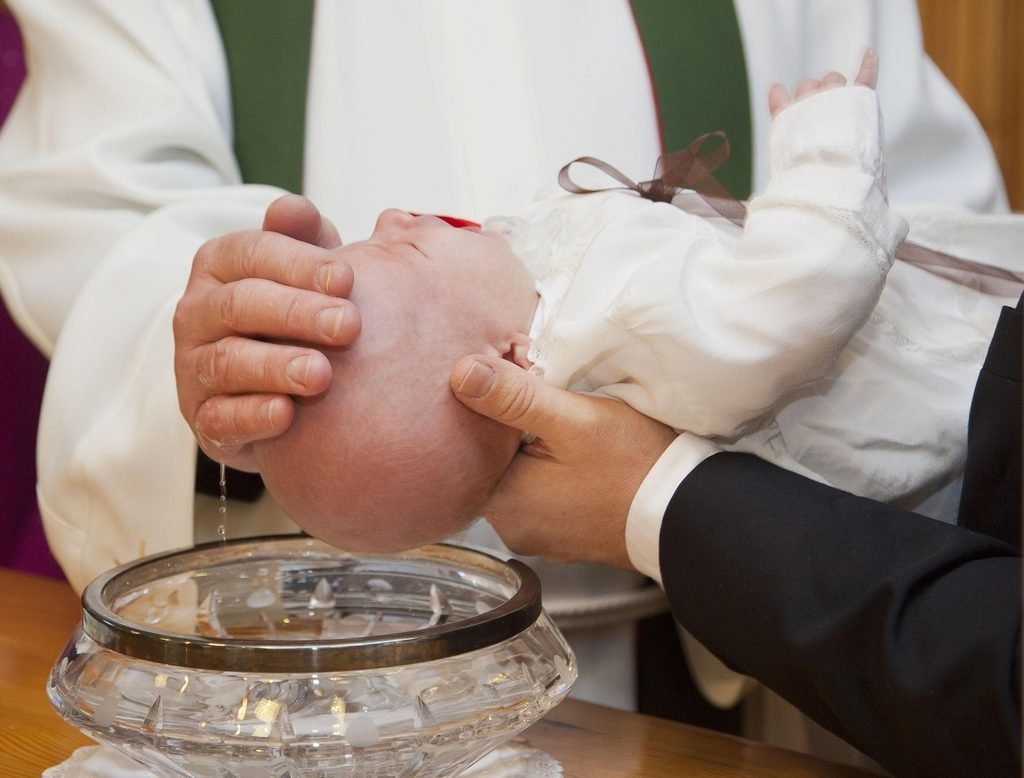
In traditional Judaism, this ceremony is known as Brit Milah (literally, “Covenant of Circumcision”). Far more than a minor surgical procedure, it is a deeply spiritual milestone performed by a specially trained religious practitioner called a Mohel. Family and friends gather as blessings are recited and the infant’s Hebrew name is formally announced, connecting the newborn to an unbroken chain of ancestors stretching back nearly four millennia.
Yet Jewish law (Halakha) establishes one paramount rule: the child’s life and health always take priority. If a newborn boy is ill or underweight on the eighth day, the ceremony is strictly postponed until he has fully recovered. (Keep this principle in mind—we will return to it when we examine modern European legal debates later in this article.)
Here is a fascinating detail from the biblical narrative that many discussions overlook. According to Genesis 17:23–27, on the very day Abraham received God’s command, he circumcised himself at age 99—and he also circumcised his eldest son, Ishmael (Ismail), who was 13 years old. Later, when his second son, Isaac (Ishaq), was born, he was circumcised at eight days old (Genesis 21:4).
Two sons of the same prophet, circumcised at two vastly different stages of life: 13 years and 8 days. In Jewish tradition, Isaac is the forefather of the Israelites, who preserved the eighth-day rule. In Islamic tradition, Ishmael is revered as an ancestor of the Arab peoples.
This brings us to a profound question that puzzles millions of people—including many Muslims today: If circumcision is one of the most universal practices in the Muslim world, why does the word “circumcision” never explicitly appear anywhere in the Quran?
Explore the Scriptural Timeline: Want to dive deeper into the historical comparison between ancient Egyptian customs and the Abrahamic covenant? Watch Chapter 2 in our full-length documentary video above, or keep reading below as we uncover the hidden Islamic legal evidence (Hadith and Fiqh) behind circumcision.
Why Is Circumcision Central to Islam If It Isn’t Explicitly Named in the Quran?
Many people—both Muslims and non-Muslims—are surprised to learn that the Arabic word for circumcision (Khitan) does not explicitly appear anywhere in the Quran. This leads to an uncomfortable question often raised in modern debates: “If it is not explicitly written in the Quran, why do Muslims treat it as a fundamental religious practice?“
The answer lies in something practicing Muslims perform five times every single day: their daily prayers (Salah).
The Quran mentions Salah 82 times and commands believers to establish prayer, yet it never specifies the exact number of units (rak’ahs) for Fajr, Dhuhr, Asr, Maghrib, or Isha. Muslims learn those essential details from the living tradition and teachings of Prophet Muhammad (peace be upon him). As the Quran itself establishes in Surah Al-Hashr (59:7): “Whatever the Messenger gives you, take it; and whatever he forbids you, abstain from it.”
Therefore, in Islamic jurisprudence (Usul al-Fiqh), the absence of a specific word in the Quran does not diminish a practice’s authority if it is established through the Quran’s broader principles and authentic Sunnah.
Following the Way of Abraham (Millat Ibrahim)
“Then We revealed to you, [O Muhammad], to follow the religion of Abraham, inclining toward truth…” — Quran, Surah An-Nahl (16:123)
While the Quran does not use the word “circumcision,” it explicitly commands Prophet Muhammad (peace be upon him) and all believers to follow the spiritual path of Abraham. Furthermore, Surah Al-Baqarah (2:124) recounts how God tested Abraham with specific commandments (kalimat), which he faithfully fulfilled. Classical Quranic commentators like Ibn Kathir note that early authorities, including Ibn Abbas, interpreted these tests as ten acts of natural purity—including circumcision—alongside the rites of Hajj and his ultimate trials of faith.
Intellectual honesty requires noting that connecting Surah Al-Baqarah 2:124 directly to circumcision is one scholarly interpretation rather than the sole reading. The definitive legal link between Abraham and circumcision in Islam is established through authentic Hadith.
The Two Pillars of Hadith Evidence
Two rigorously authenticated narrations—recorded in both Sahih al-Bukhari and Sahih Muslim (Muttafaqun ‘Alayh)—form the bedrock of Islamic scholarship on circumcision:
Abraham’s Circumcision at Age 80: Abu Hurairah reported that Prophet Muhammad (peace be upon him) said: “Prophet Abraham circumcised himself when he was eighty years old, using an adze (al-Qadum)” (Sahih al-Bukhari 3356; Sahih Muslim 2370). (Note on historical transparency: While the Book of Genesis states Abraham was 99, authentic Hadith reports state he was 80. Rather than concealing this numerical difference between traditions, objective scholarship acknowledges both accounts openly.)
The Hadith of Fitrah (Natural Disposition): The Prophet (peace be upon him) stated: “Five practices are part of the Fitrah: circumcision, removing pubic hair, trimming the nails, plucking underarm hair, and trimming the mustache” (Sahih al-Bukhari 5889; Sahih Muslim 257).
Here, Fitrah refers to the innate human disposition toward cleanliness, dignity, and divine guidance. Notice that circumcision is grouped alongside essential practices of personal hygiene—highlighting its role in physical and spiritual purity.
Is Circumcision Obligatory (Wajib) or Recommended (Sunnah)? The Four Sunni Schools
Because the Hadith of Fitrah lists circumcision alongside trimming nails and mustaches—which are recommended rather than strictly obligatory—Muslim jurists reached nuanced conclusions regarding its exact legal ruling:
The Shafi’i School: Holds that male circumcision is strictly obligatory (Wajib).
The Hanbali School: A substantial majority of Hanbali scholars also classify male circumcision as obligatory (Wajib).
The Hanafi School: Classifies it as Sunnah Mu’akkadah (a strongly emphasized prophetic tradition)—meaning neglecting it without a valid reason is considered blameworthy.
The Maliki School: Generally regards it as a strongly emphasized religious practice (Sunnah Mu’akkadah), with internal scholarly discussions on its exact weight.
Why do Shafi’i and Hanbali scholars consider it obligatory despite its placement alongside nail-trimming? Because Islamic law strictly forbids exposing or looking at another person’s private parts (Awrah) unless there is a compelling religious or medical necessity. Jurists argue that permitting this exposure for circumcision proves it carries the weight of a binding obligation rather than a mere custom
A Crucial Clarifying Point: A widespread misconception claims that a man cannot become a Muslim without being circumcised. That is entirely false. A person enters Islam solely through sincere belief and declaring the testimony of faith (Shahadah). While circumcision is strongly recommended or required afterward for those who are medically able, Islamic law always prioritizes health—if a medical condition makes the procedure harmful for an adult convert or child, it is waived or postponed.
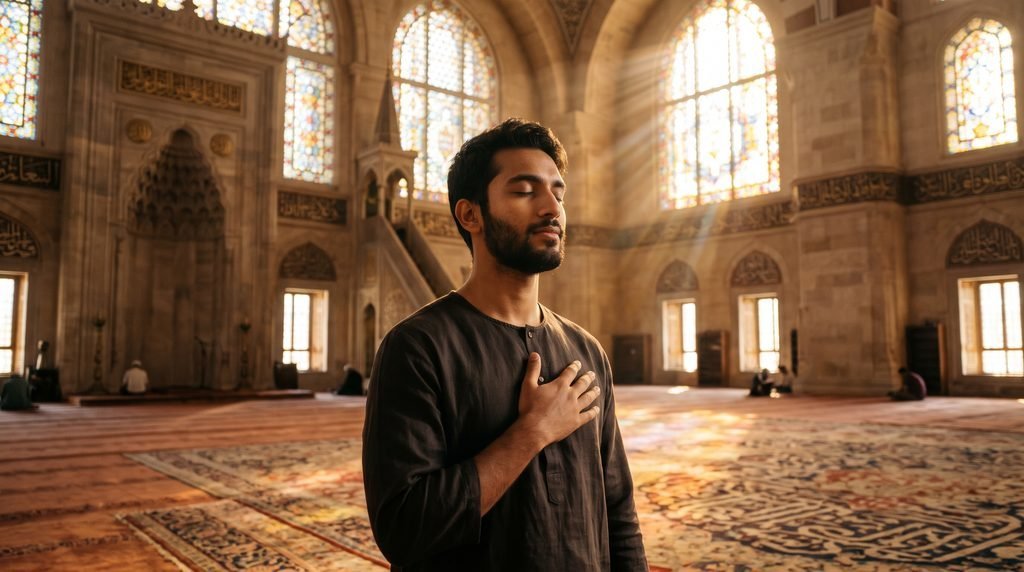
This brings us to an intriguing historical debate within Islamic literature itself: Was Prophet Muhammad (peace be upon him) born already circumcised, or was he circumcised as an infant?
Was Prophet Muhammad Born Circumcised? Examining Hadith vs. Historical Reports
Within classical Islamic historical and scholarly literature, an intriguing question has been debated for centuries: Was Prophet Muhammad (peace be upon him) born already circumcised?
Several prominent scholars leaned toward this view. For instance, the renowned classical scholar Ibn al-Jawzi stated that there was no doubt the Prophet was born circumcised, and later scholars such as Qutb al-Khaydari favored this opinion, pointing to chains of transmission graded favorably by certain Hadith critics alongside the theological argument that it reflected physical perfection. Similarly, a narration attributed to Anas ibn Malik and recorded by Abu Nu’aym quotes the Prophet as saying: “Part of my honor from my Lord is that I was born circumcised, and no one ever saw my private parts.”
However, rigorous Hadith methodology requires separating widely reported historical traditions from undisputed, rigorously authenticated (Sahih) Hadith. Hadith scholars have extensively debated the chains of transmission (Isnad) of reports claiming he was born circumcised. At the same time, alternative historical accounts claim that his grandfather, Abd al-Muttalib, named him, performed the Aqiqah, and arranged his circumcision on the seventh day after birth—yet the mere appearance of a claim in a history book does not automatically make it an authentic Hadith.
The Logical Conclusion: Suppose Prophet Muhammad (peace be upon him) truly was born circumcised—would that mean circumcision is no longer a Sunnah for Muslims? Not at all. The religious foundation of circumcision in Islam rests independently on the Abrahamic tradition (Millat Ibrahim) and the Prophet’s explicit command in the Hadith of Fitrah. Neither foundation depends on the circumstances of his birth.
Jesus Was Circumcised—So Why Don’t Most Christians Practice It Today?
Here, history takes a dramatic turn. In Judaism, circumcision is the permanent sign of the Abrahamic covenant. In Islam, it is a core prophetic tradition. Yet Jesus Christ (known as Prophet Isa in Islam) was himself circumcised according to Jewish law—so why do most Christians today not regard it as a religious obligation?
To find the answer, we must travel back to first-century Jerusalem. That Jesus was circumcised is not merely a matter of tradition; it is explicitly recorded in the New Testament:
“When the eight days were completed, the child was circumcised, and he was named Jesus…” — Gospel of Luke 2:21
Born into an observant Jewish family, Jesus was circumcised on the eighth day. His earliest followers were also Jewish—they worshipped in the Temple, observed Mosaic law, and naturally practiced circumcision.
The controversy erupted when Christianity began spreading beyond Jewish communities into the broader Greek and Roman world. As thousands of non-Jewish (Gentile) believers embraced the new faith, a fierce debate divided the early Church: Did non-Jewish converts have to undergo circumcision and follow all of Jewish law to be saved?
The Council of Jerusalem (49 CE) and the Teachings of Paul
Around 49 CE, the apostles and early Christian leaders convened a historic assembly known as the Council of Jerusalem. After intense deliberation, they reached a landmark decision: circumcision would not be imposed as a religious requirement on non-Jewish Christians.
The most influential voice behind this theological shift was Paul the Apostle. Paul argued that salvation came through faith and divine grace rather than physical rituals. In Galatians 5:6, he wrote: “In Christ Jesus neither circumcision nor uncircumcision counts for anything, but only faith working through love.” Similarly, in Romans 2:28–29, Paul emphasized an internal “circumcision of the heart” over an outward physical sign.
An Interesting Paradox: Yet, according to Acts 16:3, this very same Paul arranged for his companion Timothy—whose mother was Jewish—to be circumcised so they could preach among Jewish communities without causing unnecessary offense. This proves Paul did not condemn circumcision as a sin; rather, he opposed making it a mandatory condition for salvation. Historically, removing this requirement allowed Christianity to expand rapidly across the Roman Empire beyond a single ethnic boundary.
Today, Christianity neither forbids nor requires circumcision. While rates are relatively high in the United States due to medical and cultural traditions, it remains uncommon across most of Europe
Where Do Hinduism and Buddhism Stand?
What about the major Eastern traditions? In both Hinduism and Buddhism, circumcision holds no universal religious significance. Neither tradition mandates it as a spiritual duty, nor do they prohibit a follower from undergoing the procedure for medical, hygienic, or personal reasons.
Across five of the world’s major faiths, the exact same physical act carries vastly different meanings:
- Judaism: An essential, everlasting covenant performed on the eighth day (Brit Milah).
- Islam: A deeply rooted prophetic tradition (Sunnah) tied to Abraham and natural purity (Fitrah).
- Christianity: Practiced by Jesus and the early Jewish-Christians, but declared optional after the Council of Jerusalem.
- Hinduism & Buddhism: Neither required nor forbidden; viewed purely as a medical or personal matter.
Now We Leave Religion Behind: Having explored thousands of years of sacred texts and history, what happens when we step inside a modern hospital laboratory? Does clinical science actually support this ancient practice—or have claims on social media been wildly exaggerated?
Click this link to watch the full video on this topic. https://youtu.be/NJHDqo4IjzA
What Modern Medical Science Actually Says: Benefits, Risks, and Limits
If we set thousands of years of religious history aside for a moment and step inside a modern medical research center, a pressing question emerges: Is circumcision merely an ancient tradition, or does clinical science support it?
The scientific answer cannot be reduced to a simple “yes” or “no”. Decades of peer-reviewed research show that circumcision offers measurable health benefits in specific circumstances, while also carrying surgical risks and medical limitations.
First, consider the biological function of the foreskin (prepuce). A common myth suggests the foreskin serves no purpose at all, which is anatomically inaccurate. Covering the tip of the penis, it provides natural protection—especially during infancy and early childhood. For this reason, modern medicine does not classify it as a “useless” body part. At the same time, hundreds of millions of circumcised men live entirely healthy, normal lives without it.
Four Documented Health Benefits—In Their Proper Context
Medical literature identifies four primary areas where circumcision can reduce health risks, though context is essential for each:
- Lower Risk of Infant Urinary Tract Infections (UTIs): Clinical studies indicate that circumcised infant boys have a lower risk of developing UTIs, particularly during their first year of life. However, UTIs are relatively uncommon among healthy uncircumcised infants as well—meaning a reduced relative risk does not imply that uncircumcised boys are automatically at high danger.
- Treatment for Phimosis: In some males, the foreskin becomes abnormally tight and cannot retract, a painful condition called phimosis that can cause inflammation, recurrent infections, or urinary difficulty. When prescribed by a physician, circumcision effectively resolves severe phimosis (though topical medications and non-surgical treatments can work in milder cases).
- Reduced Risk of HIV and Certain STIs: Between 2005 and 2007, three landmark randomized controlled trials conducted in Kenya, Uganda, and South Africa found that voluntary medical male circumcision reduced a man’s risk of acquiring HIV through heterosexual intercourse by approximately 50% to 60%. Crucially, however, circumcision does not provide complete immunity—it is a supplementary preventive measure, never a substitute for condoms or safe practices.
- HPV and Rare Cancers: Research suggests circumcision may lower the risk of certain Human Papillomavirus (HPV) infections and is associated with a reduced incidence of penile cancer. Yet because penile cancer is already exceedingly rare in the general population, a large relative percentage drop translates into a very small difference in total real-world cases.
Hygiene, Surgical Risks, and the Sexual Sensitivity Debate
Hygiene and Cleanliness: While removing the foreskin makes keeping the area clean simpler, uncircumcised men can maintain identical standards of genital hygiene and health through regular, basic washing.
Surgical Risks: Like any medical procedure, circumcision is not risk-free. Potential complications include bleeding, infection, delayed healing, and—in rare instances—more severe surgical injury. When performed by a trained medical professional in a sterile clinical setting, serious complication rates are very low—but low risk is never zero risk.
Does It Affect Sexual Sensitivity? Few topics spark fiercer debate. Some researchers and bioethicists point out that removing the foreskin removes specialized nerve endings, potentially altering certain aspects of physical sensation. Conversely, multiple large-scale clinical studies have found no significant average difference in overall sexual satisfaction between circumcised and uncircumcised men. The critical scientific distinction is that nerve sensitivity and overall sexual satisfaction are not identical—and claiming either that circumcision inevitably ruins sexual experience or that it has zero sensory effect oversimplifies incomplete evidence.
What Do the WHO and American Academy of Pediatrics Say?
https://www.who.int/publications/i/item/9789240054097
https://en.wikipedia.org/wiki/Circumcision
Major global health bodies take a measured, context-driven stance:
- World Health Organization (WHO) & UNAIDS: Actively recommend voluntary medical male circumcision as an effective public health strategy in regions with high HIV prevalence and predominantly heterosexual transmission. However, the WHO has never declared circumcision mandatory for every male worldwide.
- American Academy of Pediatrics (AAP): In its landmark policy statement, the AAP concluded that the preventive health benefits of newborn male circumcision outweigh the surgical risks. Even so, the Academy stopped short of recommending universal, routine circumcision for every newborn—emphasizing instead that parents should make an informed decision after weighing medical evidence alongside religious, cultural, and personal values.
The Scientific Verdict: Science views circumcision neither as a miracle cure-all nor as a medically worthless ritual. Its value depends entirely on medical context and individual circumstances.
Yet Science Cannot Answer the Final Question: What happens when a legal court steps in and asks: “Even if parents have religious or cultural reasons, does anyone have the right to permanently alter a child’s body before the child is old enough to consent?”
Click this link to watch the full video on this topic. https://youtu.be/NJHDqo4IjzA
Myths, Controversies, and the Legal Battle Over Bodily Autonomy
We have explored thousands of years of religious scripture, archaeological history, and clinical research. Yet across social media today, the conversation around circumcision is often dominated by extreme, exaggerated claims. One side insists that men cannot remain healthy without it; the other dismisses it as having zero medical value. Before examining the modern legal battle, let us separate viral internet myths from documented facts:
Myth 1: “Circumcision prevents all diseases.” False. While it reduces the risk of specific conditions (such as infant UTIs and heterosexual HIV acquisition in high-prevalence regions), it does not grant total immunity against any disease or replace safe practices and regular hygiene.
Myth 2: “Circumcision has zero health benefits.” Also inaccurate. Peer-reviewed research confirms measurable preventive benefits in certain contexts, alongside its role as an effective medical treatment for severe phimosis—even though it is not medically mandatory for every male.
Myth 3: “Circumcision is exclusively an Islamic custom.” Historically false. Evidence of the practice appears in ancient Egyptian tombs over 4,300 years ago, it serves as a foundational covenant in Judaism (Brit Milah), and it was practiced in early Christianity as well as across diverse African and Semitic cultures long before Islam.
Myth 4: “Because the word isn’t in the Quran, it holds no weight in Islam.” Incomplete. Just as the Quran commands daily prayer (Salah) without listing the number of units (rak’ahs), Islamic law establishes practices through the Quran’s directive to follow the way of Abraham (Millat Ibrahim) combined with rigorously authenticated Hadith on Fitrah.
Cologne, 2012: The Court Ruling That Shook Europe
Some questions cannot be settled in a medical laboratory or solely by quoting religious texts. In the modern West, the debate over circumcision has moved squarely into courtrooms and human rights forums.
On May 7, 2012, the Regional Court of Cologne (Landgericht Köln) in Germany issued a ruling that sparked international headlines. The case involved a doctor who had circumcised a four-year-old Muslim boy at his parents’ request, after which the child suffered significant bleeding.
In a paradoxical decision, the court acquitted the doctor—ruling he had acted in good faith under uncertain legal standards—yet simultaneously declared that non-medically necessary circumcision of a minor constituted unlawful bodily harm, arguing that a child’s right to physical integrity outweighed parental religious rights.
The backlash was immediate and fierce. Jewish and Muslim leaders across Europe protested, with the head of a European rabbinical organization calling the decision the gravest threat to Jewish religious life in Germany since the Holocaust. Figures close to Chancellor Angela Merkel warned that Germany risked becoming an international laughingstock if religious circumcision were effectively criminalized.
Just six months later, on December 12, 2012, the German parliament (Bundestag) intervened—voting 434 to 100 to enact Section 1631d of the German Civil Code (BGB). The law explicitly affirmed the right of parents to consent to the religious circumcision of a male child, provided the procedure is performed according to strict medical standards without endangering the child’s welfare (allowing trained religious practitioners, such as mohels, to perform it during the first six months of life).

Consent, Bodily Autonomy, and the “Intactivist” Debate
Passing a law in Germany did not end the philosophical debate. Across several European countries—including Iceland and Denmark—campaigns led by movements known as “intactivists” have sought to ban non-medical circumcision for minors. Their core argument is straightforward: an infant cannot give informed consent to a permanent, irreversible alteration of his body, so the decision should wait until adulthood.
Yet this raises a deeper ethical dilemma: Where do we draw the line on parental authority? Parents routinely make consequential medical decisions for infants who cannot consent—such as administering vaccinations—believing they are acting in their child’s best long-term interest. While vaccinations and circumcision differ in medical purpose and risk, both force society to ask a fundamental question: Who holds the ultimate authority to define a child’s best interests—the parents, medical science, the state, or the future adult?
Clarifying Another Sensitive Comparison (Male Circumcision vs. FGM): In public debates, critics occasionally equate male circumcision with Female Genital Mutilation (FGM). Medical and legal bodies worldwide—including the World Health Organization—draw a sharp distinction between the two. FGM is classified as a severe human rights violation that offers zero health benefits and inflicts profound physical and psychological harm. Male circumcision, by contrast, is a far less invasive procedure associated with specific documented health benefits when performed safely. Even so, bioethicists note that the underlying question of infant consent remains central to modern discussions.

Where Religion, Medicine, and Law Find Common Ground
Religious scholars, physicians, and legal theorists evaluate circumcision through different lenses—spiritual obedience, clinical outcomes, and individual rights. Yet beneath the fierce headlines lies a remarkable consensus that receives far too little attention. Across all three domains, responsible authorities agree that whenever circumcision is performed:
- It must be carried out by a properly trained, qualified practitioner.
- It must take place in a clean, sterile, and hygienic environment.
- Appropriate pain-management measures must be used to minimize suffering.
- Health always comes first: If a child is unwell or at medical risk, the procedure must be postponed—a principle explicitly upheld in both Jewish Halakha and Islamic Fiqh.
- Parents must receive clear, balanced information about benefits, risks, and alternatives before giving consent.
Conclusion: A Question Carved in Stone for 4,500 Years
Let us return one final time to that ancient stone wall in Saqqara, Egypt.
“Hold him firmly so that he does not pass out.”
Four and a half thousand years ago, those words were inscribed beside a young man entering adulthood. Today, the conversation carries even greater moral weight because the person at the center of the decision is most often a newborn child.
In this investigation, we have not set out to tell anyone what they must believe. Instead, we have examined the historical, scriptural, scientific, and legal evidence behind each perspective—asking where the facts are solid and where honest uncertainty remains. Questioning religious traditions does not mean rejecting faith; indeed, a faith strong enough to withstand thoughtful inquiry often emerges deeper and more resilient.
What do you think? Where should society draw the line between honoring ancient religious traditions and protecting a child’s future right to decide for himself? Share your perspective in the comments below.
Click this link to watch the full video on this topic. https://youtu.be/NJHDqo4IjzA